Official Importer

Official Importer
Royal Enfield models
Scroll down
Tips and advice
Three paths to a cafe racer: build one, buy a used one, or get a factory-made Continental GT 650. What to watch out for when customizing and how it differs from a scrambler.
Cafe racer is one of those terms every motorcyclist knows well, but few can explain precisely. It represents a light and lean motorcycle, low handlebars, a solo seat, and a look that ages much better than most of today's machines. If this aesthetic has caught your eye and you're wondering how to get a cafe racer (whether to build one, buy a used one, or get a brand new one), you're in the right place.
We at Vintage Garage Motors are the official importer of Royal Enfield for the Czech Republic, and we love the cafe racer style on principle. But let's start with the basics. You'll learn what it actually is, where it came from, and what your real options are today. And in the end, we'll get to why the factory-made Continental GT 650 is the easiest path to the right riding experience.
A cafe racer is a motorcycle customization style that originated in Britain in the 1950s and 60s. It is recognizable at first glance by its absolute minimalism. Typical features include low clip-on handlebars, a sporty, tucked-in riding position, a solo seat, a fuel tank with knee cutouts, and a maximum effort to reduce weight. Everything unnecessary simply had to go. What remained was only what would get you from point A to point B faster, and look great doing it.
The keyword is character. A cafe racer was never primarily about the highest performance on a spec sheet. It was always mainly about the feeling. About how the bike looks parked in front of a pub and how it sounds when you take off. That specific DNA has remained to this day.
The story begins in post-war Britain. Young people gathered in cafes along newly built roads (hence the name "cafe"), and a motorcycle was significantly more affordable for them than a car. They modified their machines their own way. They removed everything that added weight, narrowed the tanks, and lowered the handlebars. The goal was to get as close as possible to what they admired at races, especially the famous Isle of Man TT, which has been held since 1907.
The famous legend of the so-called "ton-up boys" also comes from this era. These were riders who tried to break the 100 mph (roughly 160 km/h) barrier on these modified machines while racing between two establishments. How much of this is truth and how much is myth is still debated today. But what is certain is that this was when iconic builds like the Triton were born: a Norton frame with a Triumph Bonneville engine. They simply built with the best parts they had on hand.
Over time, even the brands themselves realized that this style could be profitable. They began offering factory-made cafe racer versions of their models. Sometimes they only adjusted the look and left the performance as is. The entire category gradually shifted from a pure desire for speed to the realm of aesthetics. And that is exactly where it has largely remained to this day. A cafe racer is perceived as a style and a lifestyle, not as a racing class.
In our country, this culture has a surprisingly vibrant base. There are specialized garages and workshops that build cafe racers purely on commission. There are e-shops with specific parts and an entire community revolving around retro motorcycles. When you say "I have a cafe racer" today, most motorcyclists know exactly what you're talking about. But what was missing on the Czech market for a long time was an affordable factory option for someone who loves this style but doesn't want to spend the whole winter with a screwdriver in their hand. Fortunately, that has recently changed.
Retro styles are often confused, so let's break them down quickly and simply. They don't just differ in appearance, but primarily in their purpose.
Neither is objectively better; it all comes down to how you actually want to ride. You choose a cafe racer when you’re drawn to a sportier riding position and clean, retro road lines.
This is where the rubber meets the road and you decide exactly which path to take. Each option has its own unique charm and its own real-world challenges.
Building your own machine is by far the most romantic option and the true heart of the original scene. You take an older, reliable base (popular choices include Honda CBs, Yamaha XJRs, or old twins), strip off all the excess, add stylish parts, and end up with a unique piece that no one else on the road has. However, you have to count on a huge investment of time and money, and the fact that the result depends on your skill. And let’s be honest, such a build doesn’t always start reliably every single day.
Buying a used machine is incomparably faster. There are plenty of finished customs and original factory retro bikes on the market today. You can take a look at our certified pre-owned Royal Enfields. The key to success here is history. Ask for the service log and find out exactly what someone might have "improved" at home. With amateur builds, the quality of workmanship varies from bike to bike, so being cautious here can save you a lot of money and stress.
If you are going after a used custom build, thoroughly check a few things before you pay for it:
If this detailed inspection and uncertainty puts you off, you’re not alone. That’s exactly why the third path is becoming increasingly popular.
Buying a new factory cafe racer is guaranteed to be the easiest way to get that authentic feeling without compromising on reliability. You get the style you’ve been dreaming of, a factory warranty, and the peace of mind that the bike will start on the first try every single morning. Until recently, there weren't many such machines on the market. But today, there is the Continental GT 650.
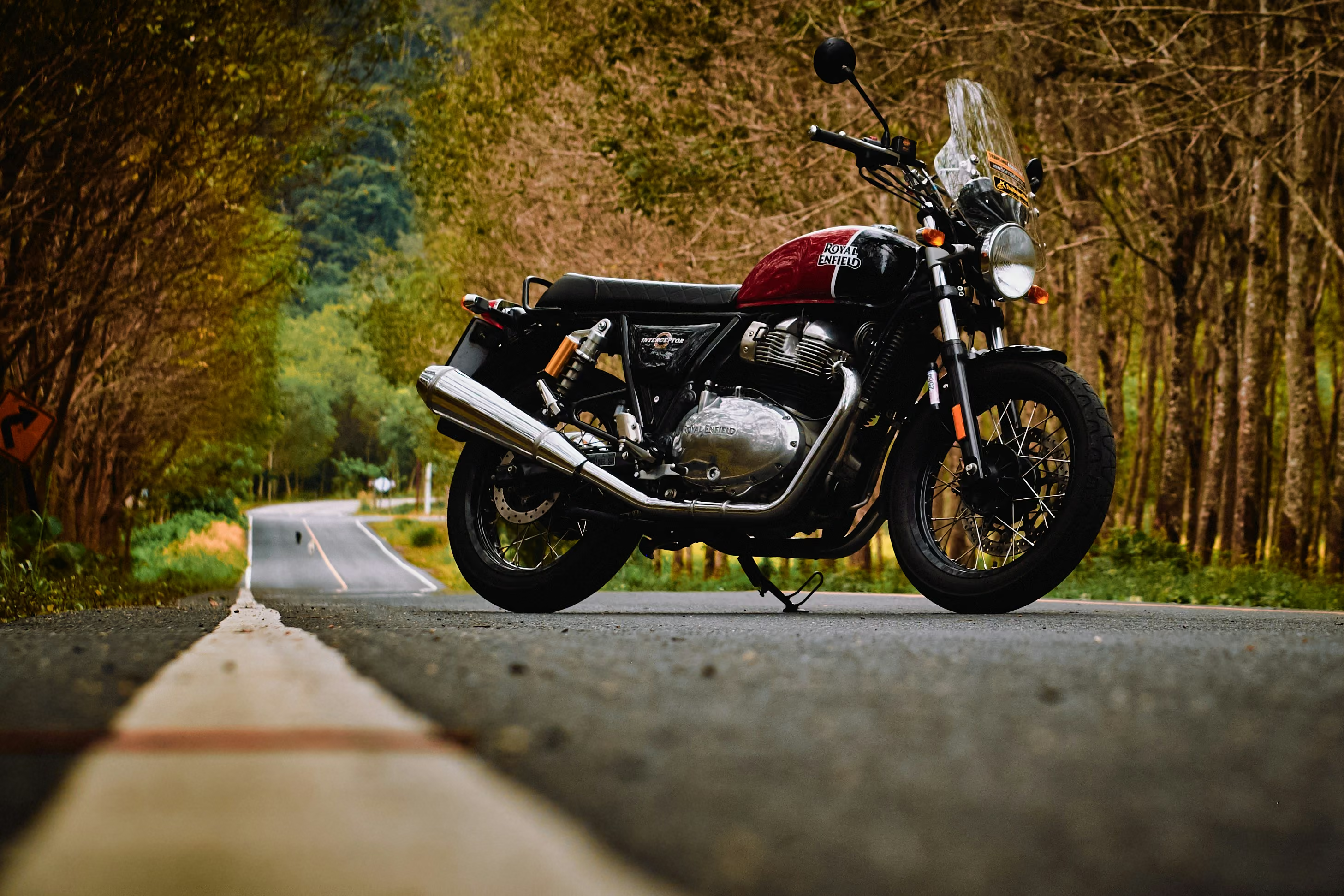
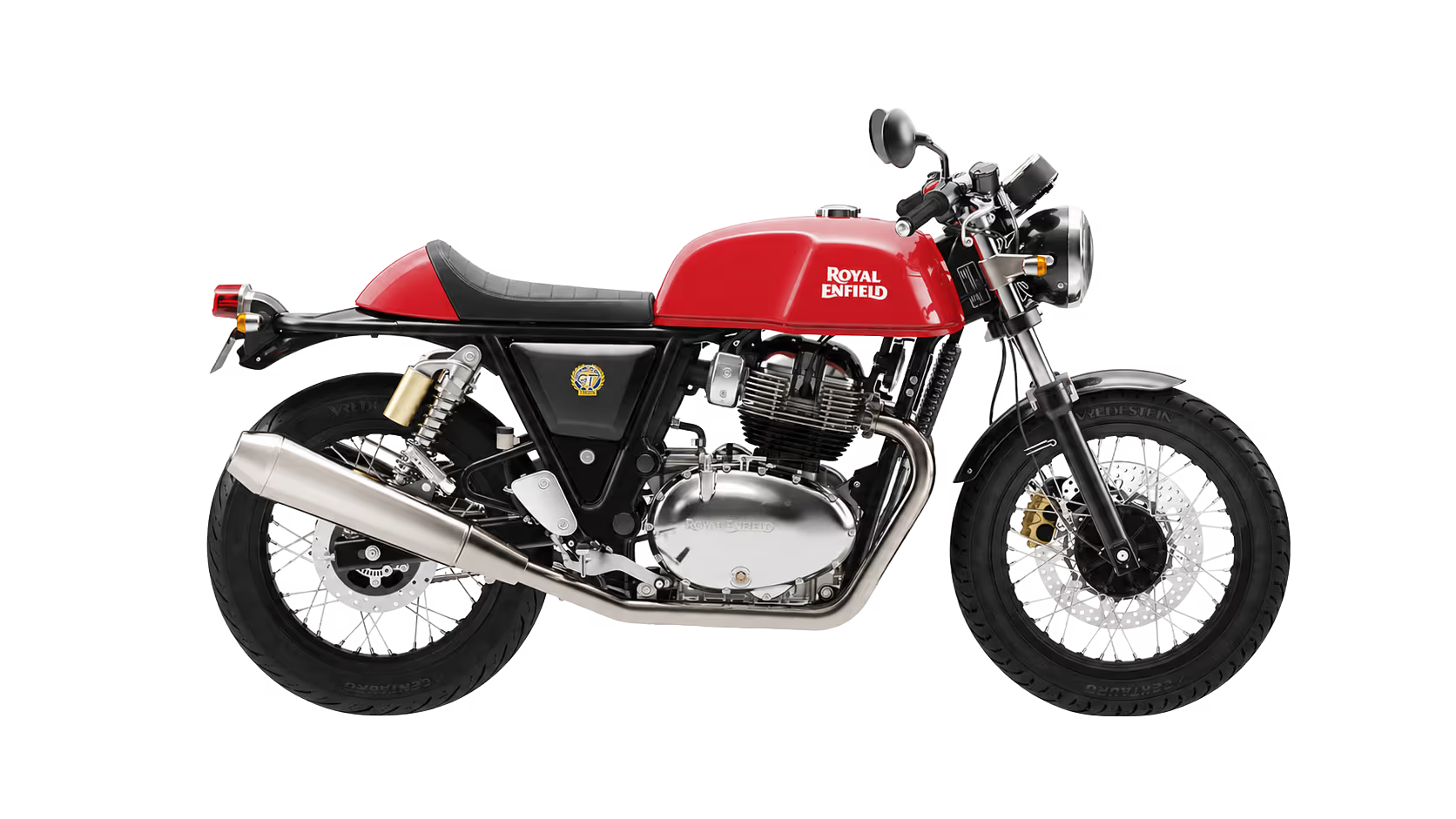
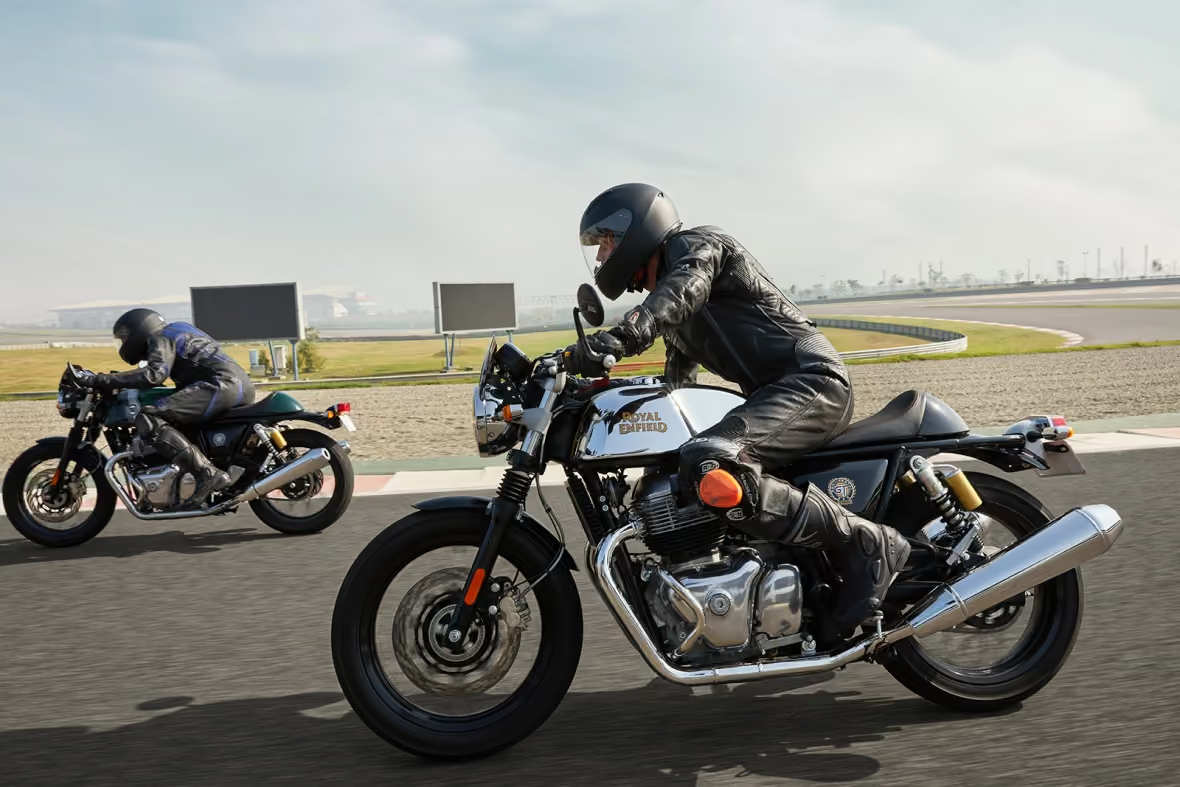
The Royal Enfield Continental GT 650 is no cheap retro costume. It is a cafe racer exactly as it was meant to be. It features low clip-on handlebars, a slim fuel tank, a sporty riding position, and a refined 648cc air-oil-cooled twin-cylinder engine. By the way, it has that exact deep sound that gave birth to this entire category in the first place.
You get honest style straight from the factory, plus a three-year factory warranty and three years of roadside assistance with every new bike. Not to mention the support of trained mechanics using original parts.
In other words, you get that raw 60s feeling, but safely combined with effective brakes, ABS, and 21st-century reliability. No need for winter tinkering in a freezing garage or guessing whether you’ll actually make it to your destination.
And that riding position is truly worth it. You lean your body over the tank, your hands are low on the clip-on handlebars, and suddenly it makes perfect sense why this motorcycle class was created. The twin-cylinder engine pulls beautifully and smoothly from low revs, so you don't have to unnecessarily push it to high RPMs. Just enjoy a relaxed ride on a back road and listen to exactly what people still buy cafe racers for today. You can find details and current specifications on the model page Continental GT 650.
Let’s be completely fair. While the sporty cafe racer position is amazing on back roads and short, spirited rides, it can be quite demanding on your wrists and back during long periods of sitting in traffic. If you dream of a pure, undisturbed cafe racer experience and spend most of your time riding just for the joy of it, the Continental GT 650 will suit you perfectly. However, if you are looking for an everyday machine for hours in the saddle, you might want to keep reading.
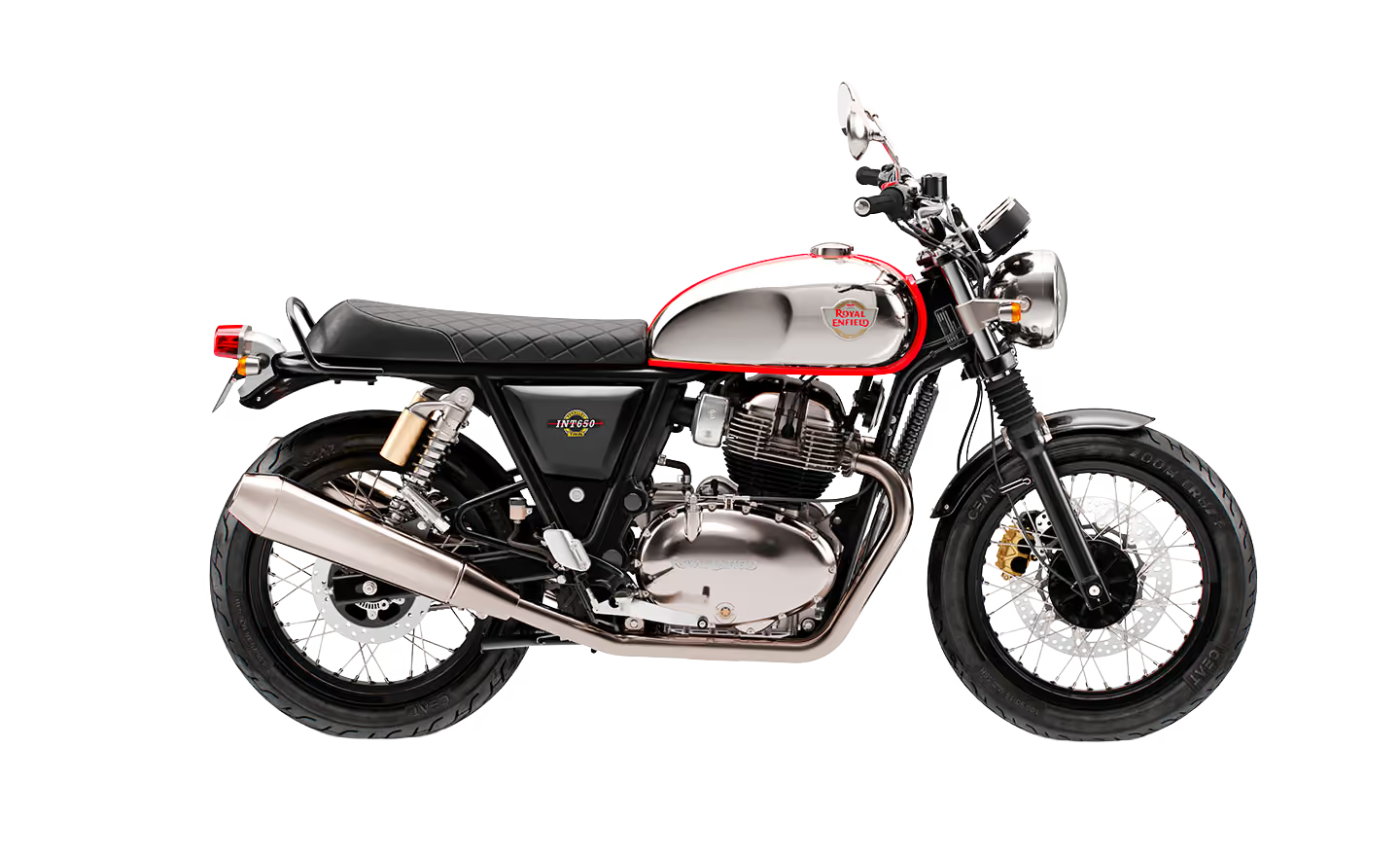
Fortunately, the Continental GT has a sibling. It’s the Interceptor 650, which is built on the exact same twin-cylinder engine but offers a more upright riding position and significantly wider handlebars. It represents the same British character, just in a much more comfortable package. It is a classic roadster that can easily handle congested city streets, an afternoon trip, or a long day in the saddle. If you are still torn between raw style and touring comfort, try both bikes. You will feel the real difference within the first few minutes of riding. More on the model page Interceptor 650.
Customers often ask if they can ride a cafe racer right from the start with an A2 license. We have great news for you: the Royal Enfield 650 twins produce 47 horsepower from the factory and fall within the legal 35 kW limit. You can ride them immediately with an A2 license, without any power restrictions. The only thing you need to keep in mind as a beginner is their higher weight (around 212 kg). Therefore, we recommend them as a first bike after riding school primarily to those who are physically stronger or have a bit more experience.
If you are just starting out with motorcycles, take a look at our guide Royal Enfield for A2. You will find lighter classics there that will give you an authentic retro feel right from the start, and you can gradually work your way up to your dream twin-cylinder cafe racer with a clear head and the necessary confidence. As for the smallest 125cc category, while they sometimes carry the "cafe racer" marketing label, it is often more about visual style than true mechanical character. Sometimes it pays to wait a while for something with a real soul.
The price is exactly where the Royal Enfield brand always hits the mark. The well-known motto "British character, Indian strength, and accessible pricing" holds true here in every respect. RE's 600cc twins have long been among the most reasonably priced new machines in their displacement class. You can always find the current price list directly on the specific model page, and you can easily calculate potential monthly payments using our smart financing.
To be honest, no article, no matter how good, can replace the first five minutes spent in the saddle. A cafe racer is all about the feeling itself, and that simply cannot be read from a screen. So, go ahead and book a test ride on the Continental GT. Compare it live with the Interceptor, and you'll know almost immediately which one is the right one for you. You can find us all over the country, so just choose your nearest dealer and stop by.
It is a motorcycle style originating from Britain in the 1950s and 60s. At first glance, it is recognizable by its minimalism, low clip-on handlebars, sporty riding position, solo seat, and overall weight reduction. Everything is functionally subordinate to speed and a clean look. Today, however, it represents a lifestyle aesthetic and attitude rather than a strictly racing class.
It can be, provided you choose a reasonable displacement and a modern machine with ABS. However, the classic sporty riding position can be demanding on the rider's wrists and back during long periods in traffic. For a complete beginner, a factory cafe racer with a balanced chassis and smoother power delivery is more suitable, or you can start with a light classic and get a cafe racer as your second dream bike.
A cafe racer is a pure road machine focused primarily on speed and style: it features low handlebars, a sporty riding position, and road tires. While a scrambler is based on the same retro aesthetic, it can easily handle light off-road terrain thanks to a higher riding position, knobby tires, and greater ground clearance. In short, a cafe racer is about smooth asphalt, while a scrambler celebrates versatility.
Are you drawn to a cafe racer but still not sure if its sporty riding position is right for you? Come for a test ride on the Continental GT 650, and we'll be happy to discuss it together.